
How To
Use Your
BIG
Growth
Planner
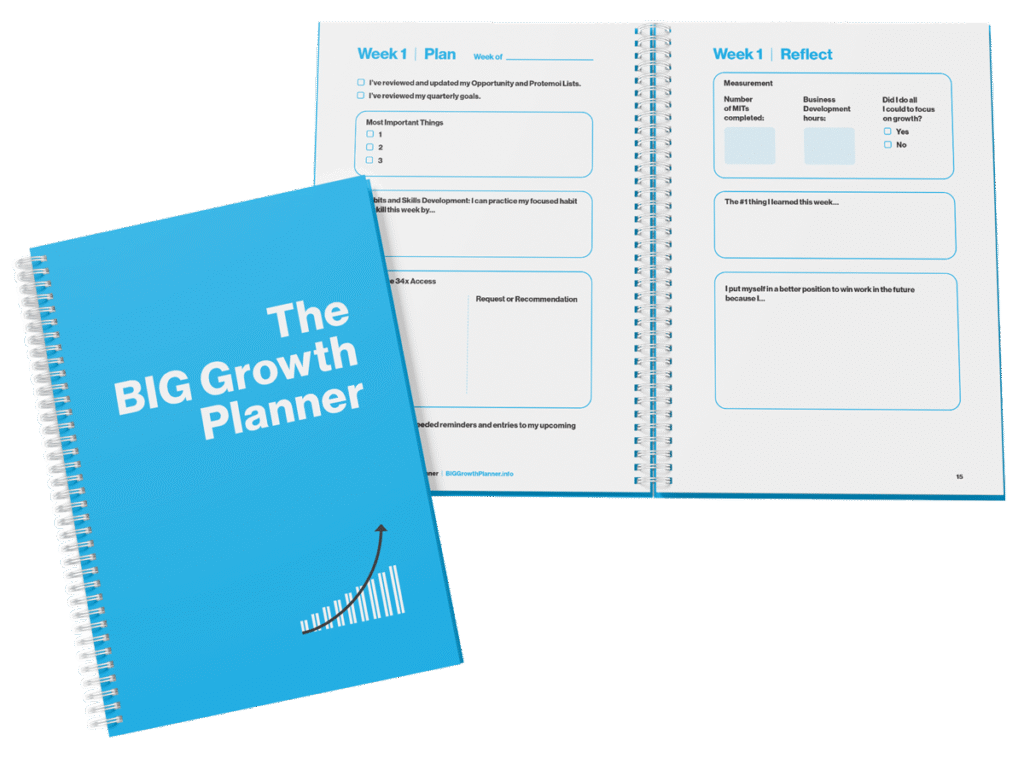

Organize
Organizing your BD efforts brings clarity, focus, and structure to what matters most. When you write things down, you not only see the path forward, but you hold yourself accountable to follow it.

Grow
Momentum doesn’t come from one big push—it’s built by showing up consistently. Growth happens when you focus your time on the right relationships and follow through with meaningful action.

Scale
This planner is your tool for turning big BD ideas into action. For help creating those ideas, try GrowBIG.ai —trained on nearly 4 million words of our content to guide your next move.

We have available a more detailed, printer-friendly instruction booklet.
Step 0
Organize: Get Things Out Of Your Head
Before you dive into planning, set yourself up with a strong foundation. Step 0 is a one-time setup—once it’s done, you’ll just keep it updated.
Start by getting your key business development priorities out of your head and onto paper (or into a digital system). Your brain is great for creativity, not project management, and business development is a project. You need structure to stay on track. To help, did you know we have a tool called GrowBIG AI, that is like having us on your team 24/7? Learn more here.
Create two essential lists:
Protemoi List: Your top 10–20 most important relationships—clients, referral sources, or internal champions. For each, note one action you can take to deepen the relationship that’s 100% in your control.
Opportunity List: Everything you want someone to say “Yes” to—new work, referrals, speaking engagements, promotions. Again, list one next step for each that’s fully in your control.
Once you’ve built these two lists, you’re ready to start planning your quarter with clarity.
Pro Tip: Don’t get stuck on finding the perfect system. Whether you use the worksheets in this planner, a custom CRM, or just a notes app,
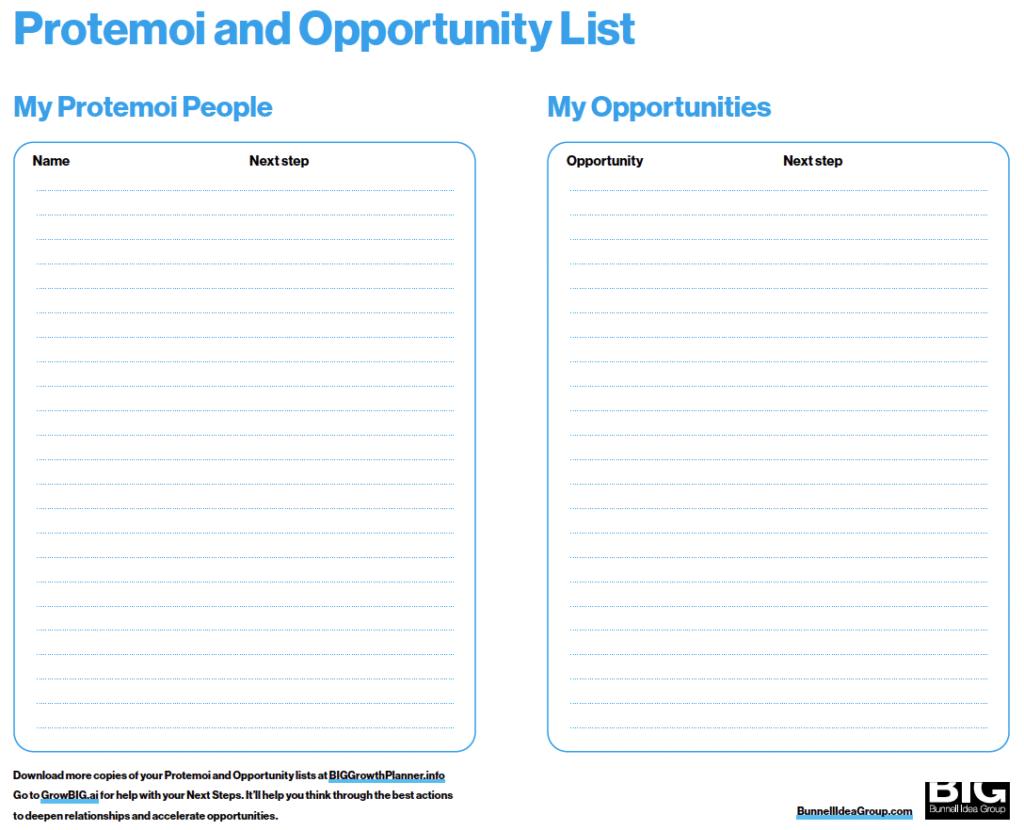
If you would like a digital or printer-friendly version of the Protemoi and Opportunity worksheet click here.
Step 1
Plan: Prioritize Your Quarter
Take 20–30 minutes to zoom out and set your focus for the next 90 days. Quarterly planning is the sweet spot—it pushes strategy without losing urgency.
Conduct a Self Assessment
Score your current BD habits to create a baseline. Most start in the 30s—consistency is key to improvement.
Cut to Climb
Free up 50 hours by eliminating, delegating, or automating low-value work. You can’t climb higher unless you let go of what’s holding you down.
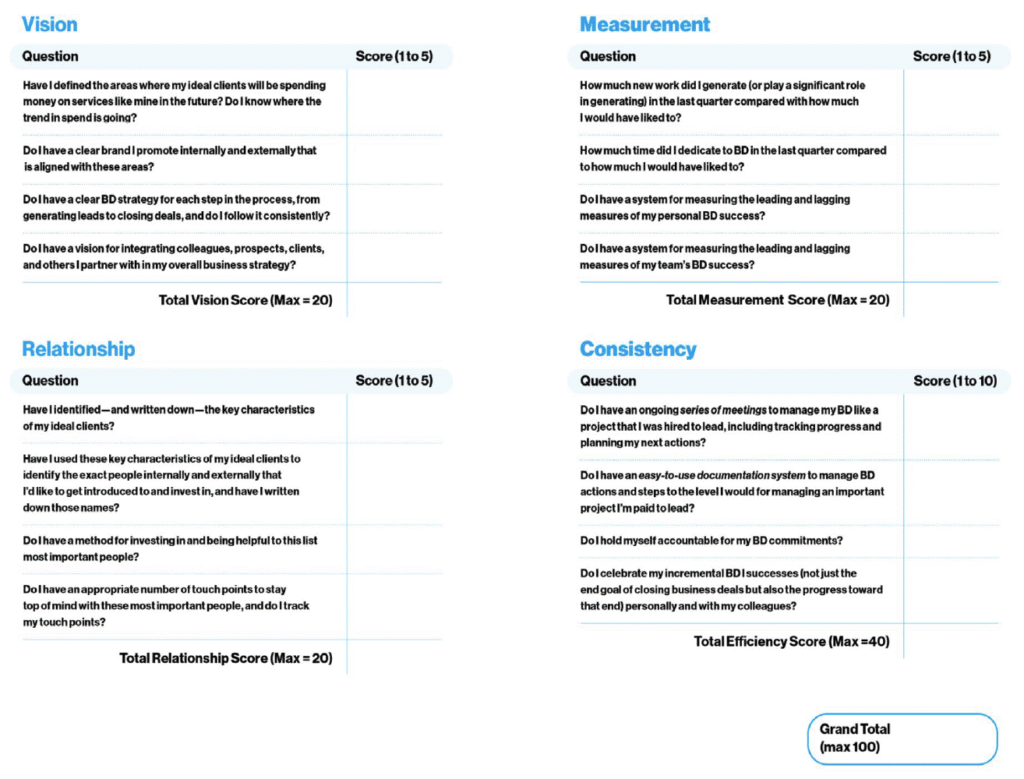
If you would like more detailed, printer-friendly instructions, you can click here.
If you would like more detailed, printer-friendly instructions, you can click here.
Fill Out Your Top Insights
Take 3–5 minutes to jot down your top takeaways—one looking back, one forward—to shape your goals in the next step.
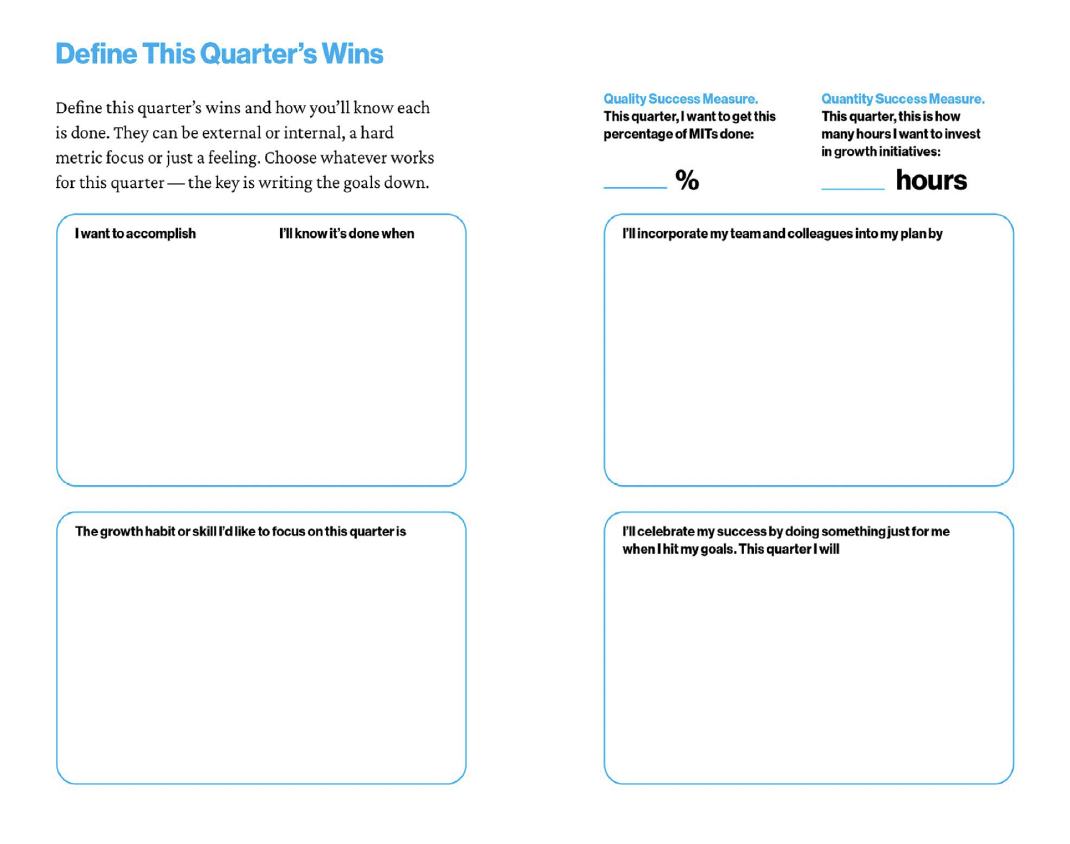
Define This Quarter’s Wins
Define your top wins for the quarter, choose one habit to build, set clear input goals (MITs and BD hours), plan how your team fits in and pick a bold reward to celebrate success.
Step 2
Act: Build Momentum Each Week
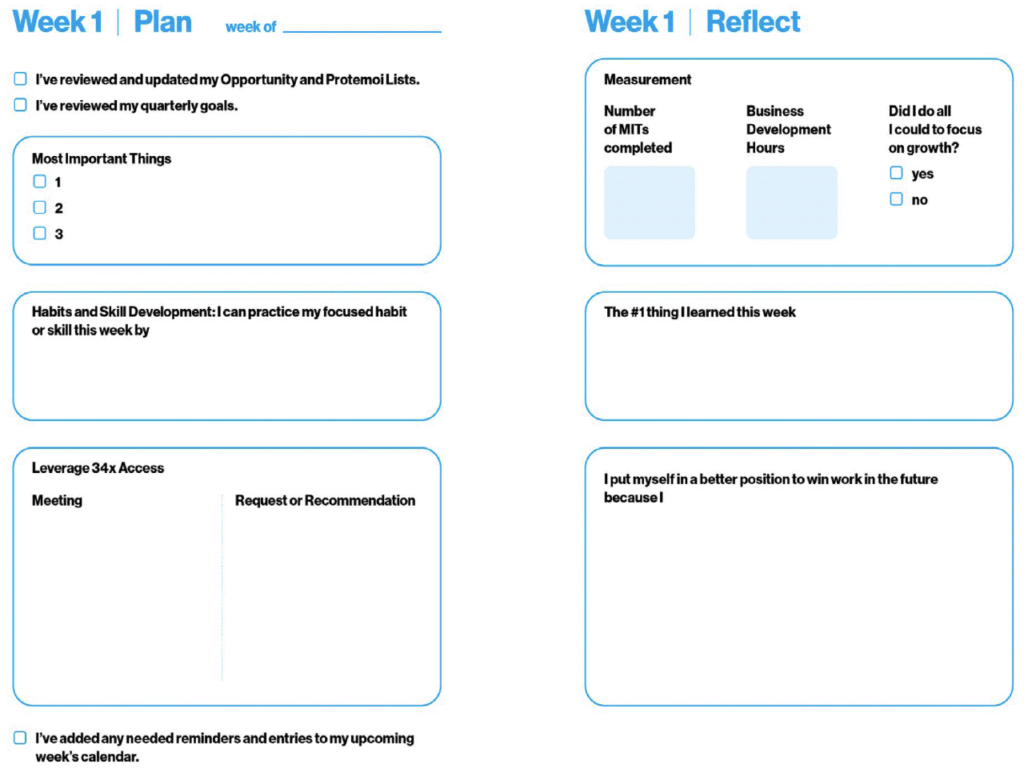
Set aside 15 minutes at the same time each week to plan—consistency builds momentum and makes the process faster over time.
Start by updating your Protemoi and Opportunity Lists, reviewing your quarterly goals, and choosing three growth-focused MITs (Most Important Things) for the week.
Select one habit or skill to improve, and look for opportunities in your week to intentionally practice it.
Make the most of face-to-face moments—asks made in person or on video are 34 times more effective than over email.
Lock in your plans by scheduling reminders or calendar blocks, so your most important actions don’t get lost in the shuffle.
At the end of the week, reflect on your progress—tally MITs completed, BD hours invested, what you learned, and how you moved closer to future wins.
Track your “All I Could” score to stay personally accountable and create weekly momentum, regardless of external results.
If you would like more detailed, printer-friendly instructions, you can click here.
Step 3
Reflect: Look Back To Learn
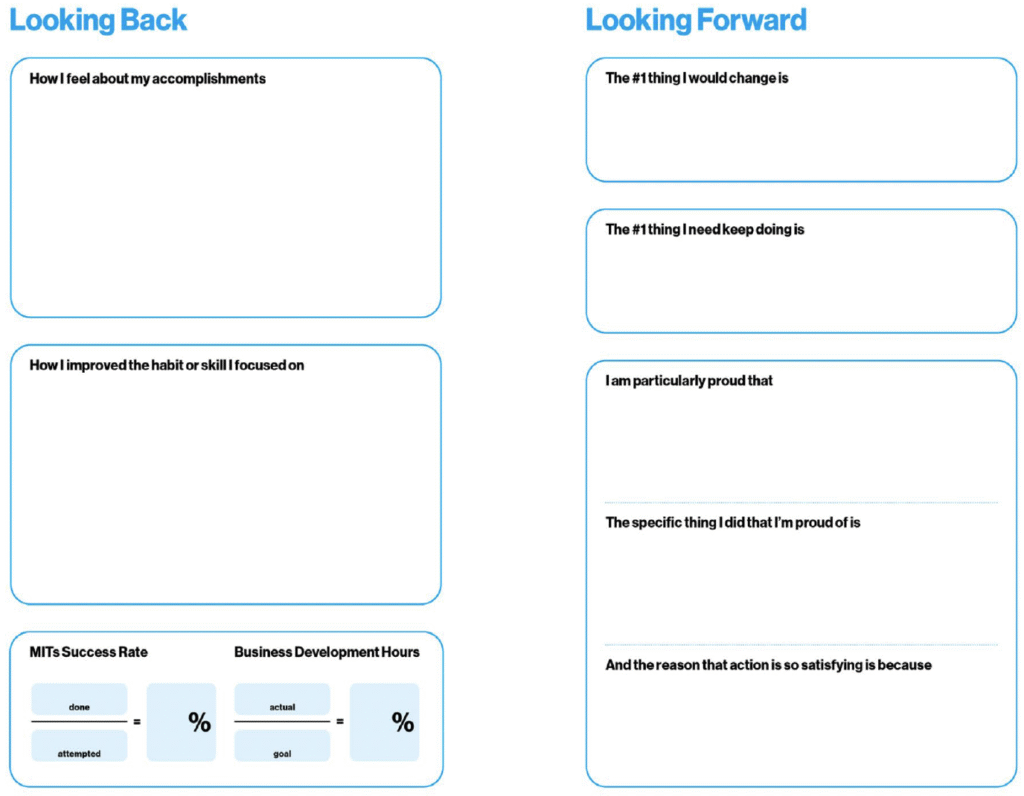
Once a quarter, take 15 minutes to reflect on broader trends—like reviewing season highlights—so you can focus your next quarter with clarity and purpose.
1. Looking Back
Once a quarter, take 15 minutes to reflect on broader trends—like reviewing season highlights—so you can focus your next quarter with clarity and purpose.
2. Looking Forward
Now that you’ve reviewed the past quarter, look ahead by writing down one thing to change and one thing to keep. Then, reflect on what you’re most proud of—what you did, why it mattered, and how it shows your growth.
Let these insights sink in and take a moment to celebrate your progress. This isn’t just about planning—it’s about building momentum through small, consistent actions.
Then, after you’ve popped the Champagne, pull out your next quarterly planner. Let’s take things to the next level, again.
If you would like more detailed, printer-friendly instructions, you can click here.
The Science Behind the BIG Growth Planner
1
Goals Alone Aren’t Enough.
You Need a Plan
Researcher Edwin Locke’s meta-study of 110 goal-setting studies found that clear goals drive higher performance. Our planner ties long-term outcomes to weekly actions, blending research and habits to help you hit your goals consistently.
2
Paper and pen packs a punch.
Researcher Mark Bohay found that handwriting notes improves memory and comprehension far more than typing. Our planner blends the focus of writing by hand with the flexibility of digital tools.
3
What we see drives decision making.
Researcher Jan Brascamp found that what we see heavily shapes our decisions. That’s why “out of sight, out of mind” rings true. A visible planner keeps growth top of mind. Unlike hidden apps, it drives focus and action.
4
Doing hard things will make you happier.
Researcher Tracy Cheung found that self-control, doing hard tasks, predicts greater happiness. Our planner’s weekly check-in keeps you focused on the high-value work that drives growth.
5
Progress creates success and happiness.
Harvard’s Teresa Amabile
found that the happiest, most productive people follow the Progress Principle, celebrating small wins. Business development is unpredictable, so our planner helps you track progress and focus on what you can control.
6
You can harness Psychological Momentum.
Researcher Seppo Iso-Ahola found that psychological momentum—feeling “on a roll”—comes from noticing how you’re setting yourself up to win. Our planner’s weekly prompt builds that momentum and fuels long-term success.
7
Spaced repetition greatly enhances learning.
Spaced repetition boosts memory and learning and by revisiting your goals, relationships, and MITs weekly, the planner helps you stay focused and follow through.
8
Asking face to face has a 34x chance of getting a yes.
Cornell’s Vanessa Bohns found face-to-face asks are 34x more effective than email. Our planner helps you use busy weeks to plan small, high-impact BD requests that build momentum.
9
Planning out what and when you’ll do something enhances the chance it will happen.
Researchers David Nickerson and Todd Rogers found planning, not reminders, drives follow-through. Schedule your MITs to get them done.
10
You need a prompt to subtract.
Researcher Leidy Klotz shows we’re wired to add, not subtract, but top performers do the opposite. Our planner’s quarterly Cut to Climb process frees your time and fuels growth.
11
You’ll make more of an impact.
Researcher Michael Gielnik found entrepreneurs don’t start with passion. They build it through effort. Our planner helps you stay consistent, build momentum, and create meaningful work.
It’s always your move, and there’s always a way to be helpful.
If you would like more detailed, printer-friendly instructions you can click here.
Resources to Help You Succeed
If you do one thing, do this — Sign up for GrowBIG AI at GrowBIG.ai. It’ll give you ideas for the actions you can take and document in this planner

Sign up for our monthly email newsletter at GrowBIGPlaybook.com. You’ll get a monthly reminder to focus on relationship development and receive our best content the moment it’s released.
If you want to sign up for Mo’s podcast,
Real Relationships, Real Revenue, subscribe at mo.show.